Master Third Position
Make third position feel as familiar as first.
Develop confident intonation, greater left-hand fluency, and the freedom to explore more music on your violin.

Develop confident intonation, greater left-hand fluency, and the freedom to explore more music on your violin.
It is never too soon to learn third position.
In nineteenth-century violin pedagogy, students could be introduced to third position within their first few months of study. It wasn't necessarily a skill reserved for years down the road.
I often call third position the launching pad to all other positions. It opens the door to beautiful, warm tonal colors unavailable in first position, a wider range of notes, and a wealth of musical possibilities.
But finding third position is one thing. Feeling comfortable playing there is quite another.
Perhaps you've already begun exploring. You recognize a few notes and can play some familiar passages. Yet the intonation isn't always reliable, the finger spacing feels unfamiliar, and sometimes those notes seem to have moved overnight.
Wouldn't it be lovely to feel as comfortable in third position as you do in first?
That's exactly what Master Third Position is designed to help you achieve.
Through video instruction, carefully organized exercises, finger patterns, scales, and musical studies, you'll develop the understanding and confidence to make third position a natural part of your playing.
When you first learned the violin, you probably didn't give much thought to finger patterns.
You learned where to place your fingers, became familiar with the notes, and gradually discovered that certain finger arrangements appeared again and again.
Without necessarily realizing it, you were learning the relationships between whole steps and half steps, developing a sense of finger spacing, and becoming comfortable with the geography of the fingerboard.
Over time, first position began to feel like home.
So why should learning third position be so different?
That was the question that inspired me to create Master Third Position.
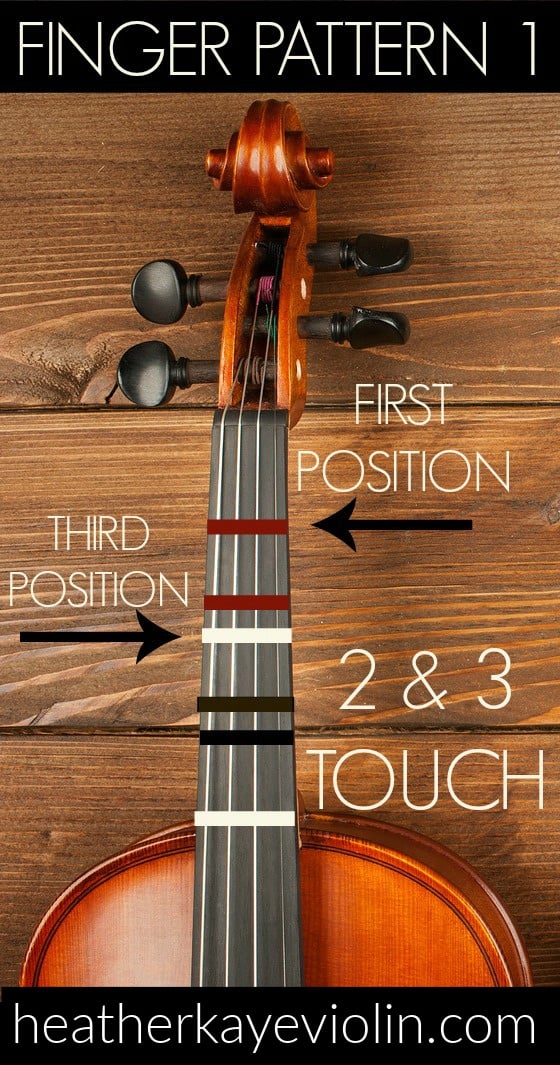
I took the familiar finger-pattern progression used in first position and applied it to third position, giving violinists a logical, organized way to become comfortable with an entirely new area of the fingerboard.
Rather than memorizing isolated notes and hoping your fingers remember where to go, you'll begin recognizing patterns, hearing relationships, and understanding the fingerboard more clearly.
The result is a thoughtful approach to learning third position, one that develops both technical confidence and musical understanding.
Finger patterns are about much more than knowing where to place your fingers.
They help you recognize the relationships between notes on the printed page and understand how those relationships translate across the four strings. At the same time, they develop finger independence, physical coordination, and spatial awareness along the fingerboard.
As we move higher on the violin, the distances between notes become progressively smaller. Our fingers must learn to accommodate these changing distances while maintaining accurate intonation.
This is where thoughtful, organized practice becomes particularly valuable.
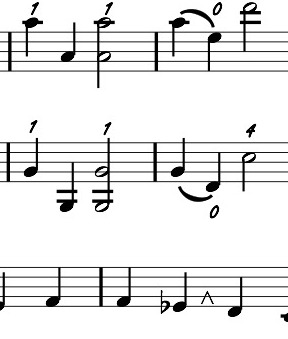
In Master Third Position, you'll work through progressive finger-pattern studies that develop these skills together. The exercises include written reference notes, using open strings and familiar notes in first position to help you check your placement and recognize the intervals you're playing.
These comparisons give you reliable points of reference. But they are not substitutes for listening.
Your ear must remain actively engaged, recognizing the relationships between notes, hearing when something needs adjusting, and guiding your fingers toward accurate intonation.
Through this combination of visual recognition, physical awareness, and attentive listening, you'll develop a more dependable understanding of third position.
The aim is not simply to memorize six finger patterns. It's to develop the independence, awareness, and listening skills that allow you to move around the fingerboard with greater confidence and precision.
Over the years, I've found myself repeating certain instructions in violin lessons:
Check that note against an open string.
Try the passage in first position.
Listen to the interval.
Now play it again.
Simple instructions, certainly. But they can make an enormous difference to the quality of your practice.
That's why I've written practical guidance directly into the exercises.
Rather than leaving you to work everything out on your own, the material helps you understand what to listen for, how to check your intonation, and how to approach passages that need a little more attention.
It's rather like having a few of my favorite teaching reminders sitting on your music stand.
And as you become accustomed to practicing this way, you'll develop something particularly valuable: the ability to hear, recognize, and correct problems independently.
The goal isn't simply to play the right notes. It's to understand how to practice for consistently accurate intonation.
Everything is organized to help you develop confidence, accuracy, and fluency as you progress.
Begin with the essentials:
You'll establish a foundation you can return to whenever you need it.
Work through six progressive finger-pattern lessons, supported by downloadable exercises and detailed practice material.
Each pattern helps you develop familiarity with the notes and finger relationships across all four strings.
You'll gradually build a clearer understanding of the fingerboard and greater confidence in your left hand.
Scales are among the finest ways to become comfortable in a new position.
You'll work with major and minor scales and arpeggios in third position, including instructional video demonstrations.
As the notes become familiar, you'll begin to recognize the same patterns appearing throughout your music.
The course also includes additional material to reinforce everything you're learning:
These studies help you carry what you've learned beyond the exercises and into your everyday violin playing.
There are many excellent violin method books, and I have a rather substantial collection of them myself!
But one of the challenges of practicing independently is knowing how to work through the material.
You can spend a great deal of time playing exercises without necessarily understanding what needs your attention.
Master Third Position brings the instruction and the practice material together.
You'll have video lessons to guide your understanding, downloadable music to work from, and carefully organized exercises that allow you to develop your skills at a comfortable pace.
You can follow the course from beginning to end or return to particular sections whenever you want to strengthen an aspect of your playing.
The aim is to make your practice more purposeful, your intonation more reliable, and third position more fluent.
If you're comfortable playing in first position and ready to expand your skills, this course is a natural next step.
Perhaps you're exploring third position for the first time.
Perhaps you've been playing in third position for years but still feel uncertain about certain notes or finger arrangements.
Or perhaps you've reached a point where your musical ambitions are moving a little faster than your left hand.
Whatever brings you here, Master Third Position offers a clear, organized way to develop greater confidence and fluency.
The course is particularly suited to adult violinists who enjoy understanding how things work, appreciate thoughtful instruction, and want to continue making meaningful progress.
Your enrollment includes:
Video lessons covering third-position fundamentals and shifting
Six progressive finger-pattern lessons
Downloadable finger-pattern exercises
Two-octave major and minor scales and arpeggios
Instructional scale demonstrations
Fourth-finger studies, etudes, and additional practice resources
Self-paced access to revisit the material whenever you wish
One-time payment. Immediate access. Learn at your own pace.
Give yourself the pleasure of playing third position with greater confidence, accuracy, and ease.
Enroll in Master Third Position
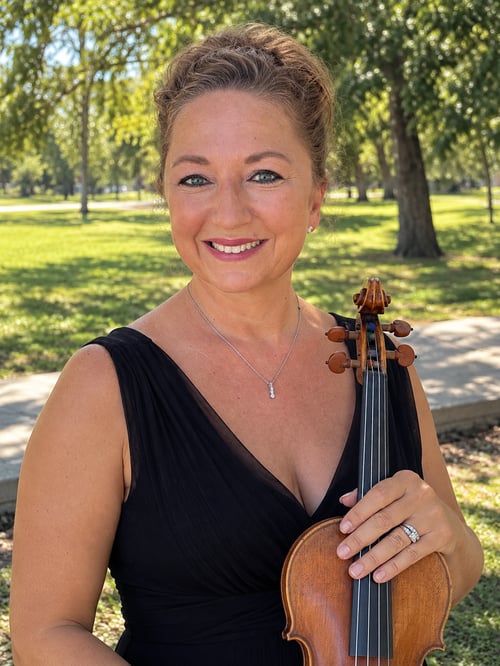
Violinist • Performer • Pedagogue • Founder of the Broadbent School of Violin Artistry
I've spent more than three decades performing and teaching violin in the United States and Europe, and I continue to find enormous pleasure in helping violinists develop a deeper understanding of their instrument.
One of the things I love most about teaching is discovering precisely what is preventing a student from progressing and finding a clear, practical way through it.
Sometimes a small adjustment in how we listen, think, or organize our practice changes everything.
My teaching is rooted in the European violin tradition, with particular attention to beautiful tone, reliable technique, and the musical intelligence that allows us to play with greater freedom.
Through the Broadbent School of Violin Artistry, I bring that approach to violinists who want to continue learning, refining their skills, and enjoying everything this remarkable instrument has to offer.
"As both a violinist and teacher, I found this to be a clear, engaging third-position method that addresses finger relationships often overlooked in traditional books. Highly recommended.”
“This course transformed material that once felt impossible into something clear and approachable, rebuilding confidence and understanding step by step.”
“A thoughtful third-position study that combines technical clarity with musical interest, encouraging confidence and creativity in practice.”