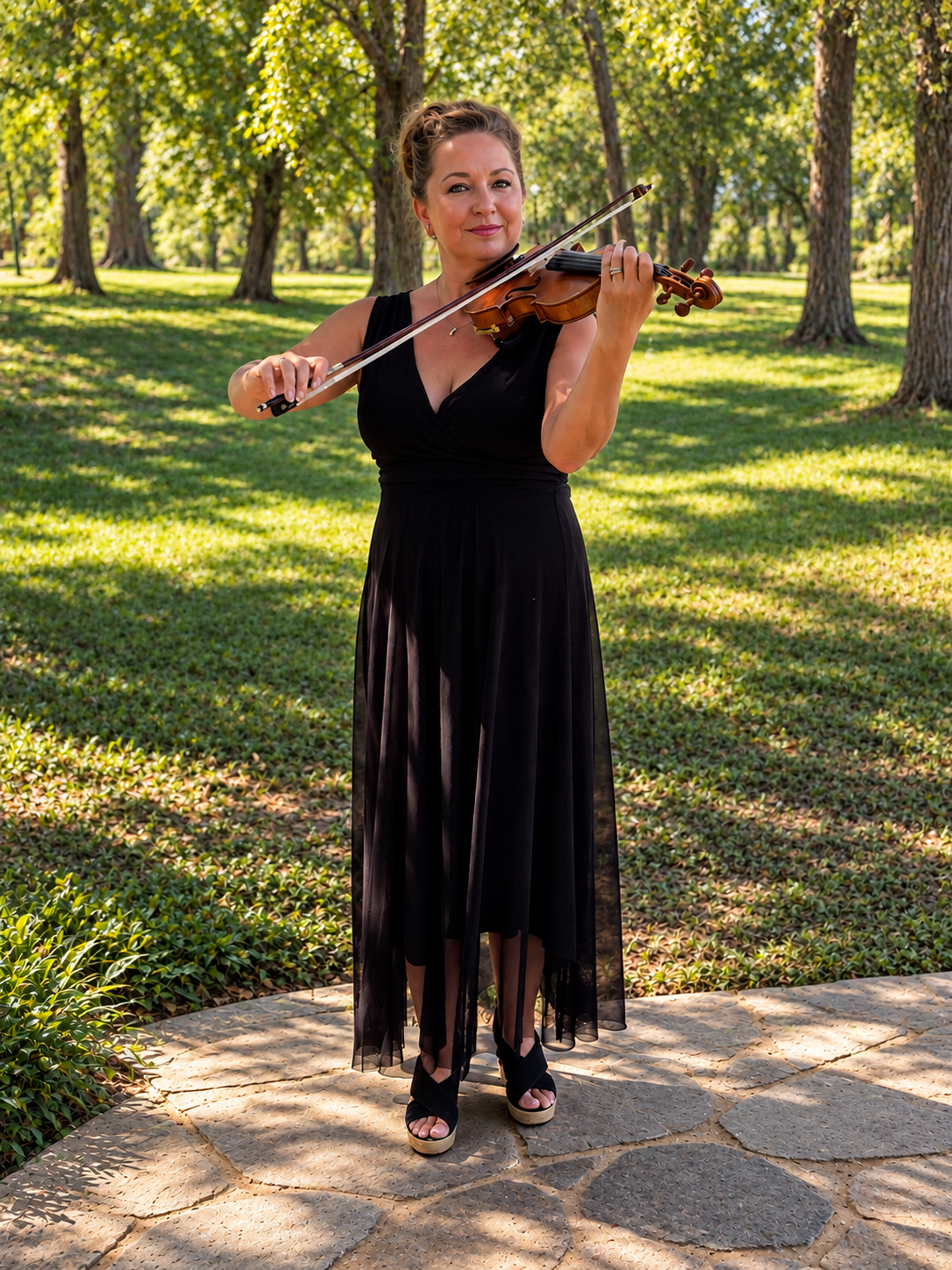
The Balanced Left Hand
Cultivating a Silent Posture That Supports Intonation, Vibrato, and Shifting

Cultivating a Silent Posture That Supports Intonation, Vibrato, and Shifting
Why does the fourth finger feel unreliable? Why does intonation change when moving between fingers? Why does the left hand become tense, even after years of playing?
Why does the left hand rock back and forth depending on which finger is playing?
Many violinists experience difficulties that appear to be separate technical problems:
These difficulties often share a common cause: an unbalanced left-hand setup.
The Balanced Left Hand is a focused course devoted to establishing a centered, balanced left-hand setup and a consistent hand frame.
Through detailed instruction and progressive technical studies, you will learn how to develop a silent hand—one that remains balanced and reliable while the fingers move independently.
The goal is not simply to eliminate tension. It is to establish a foundation that supports accurate intonation, secure finger placement, and greater technical freedom.
The Balanced Left Hand is designed as a progressive study of the fundamental principles of left-hand technique.
The course explores:
Each study reinforces the relationship between posture, balance, and reliable finger placement.
A balanced left hand is not defined by strength, stretch, or force.
It is defined by where the hand carries its weight.
In a balanced setup, the hand feels centered, with the weight distributed through the middle of the hand, between the second and third fingers.
The hand is no longer dominated by the first finger, nor does its balance continually shift to accommodate each note.
This centered setup:
Balance becomes a fundamental reference throughout violin study.
When the left hand is unbalanced, the foundation changes every time a different finger is used.
A balanced left hand eliminates this problem.
When the hand remains centered:
This course addresses intonation by restoring structural consistency, not by chasing individual notes.
When the thumb continually changes position in response to finger placement, the relationship between the fingers and the violin neck becomes less consistent.
In a balanced hand frame, the thumb has a reliable home.
It provides a point of reference without gripping or pressing unnecessarily against the neck.
The objective is a thumb that remains quiet during finger placement while retaining the freedom required for shifting and other movements.
This distinction between stability and stiffness is central to developing dependable left-hand technique.
The hand frame is established through the relationship between the first and fourth fingers.
This relationship determines the foundation from which the other fingers function.
A reliable hand frame supports:
When the hand frame is balanced, the fingers can move independently without continually shifting the position of the hand.
The objective is to establish a dependable hand frame that supports accurate intonation and freedom of movement.
A balanced left hand is a silent hand.
During finger placement:
The hand remains balanced while the fingers move.
This silence is not stiffness. It is the result of a balanced setup and a consistent hand frame.
The principle of the silent hand establishes a foundation for the more complex technical movements required in shifting, vibrato, and advanced repertoire.
Understanding the principles of balance is only the beginning.
The Balanced Left Hand will introduce progressive technical exercises that develop these principles through deliberate practice.
The studies emphasize:
Rather than practicing exercises mechanically, you will learn to recognize the technical purpose behind each study.
The Balanced Left Hand is designed for:
Although the studies begin with foundational principles, their application extends into advanced repertoire.
The Balanced Left Hand is a progressive course designed to develop over approximately three months, with lessons and technical studies released as they are produced.
Both enrollment options provide access to the same course curriculum.
Monthly Access — $55/month
Study at your own pace with access to available lessons and newly released material while your subscription remains active. Cancel anytime.
Lifetime Access — $250
Receive permanent access to the course, including future lessons and technical studies added to this curriculum, with no recurring payments.
Everything seems to be falling into place now. The death grip is loosening big time. I feel much more relaxed, and I’m enjoying my violin journey again.
The Balanced Left Hand completely changed how I think about my left hand. The idea of structural support and balance through the center of the hand has become part of my ongoing awareness when I play. This way of working brings much more reliability and ease
As a self-taught adult, studying The Balanced Left Hand was extremely enlightening. It helped me understand foundational principles I didn’t know I was missing, and gave me a clearer, calmer way to organize my left hand as I continue my violin journey
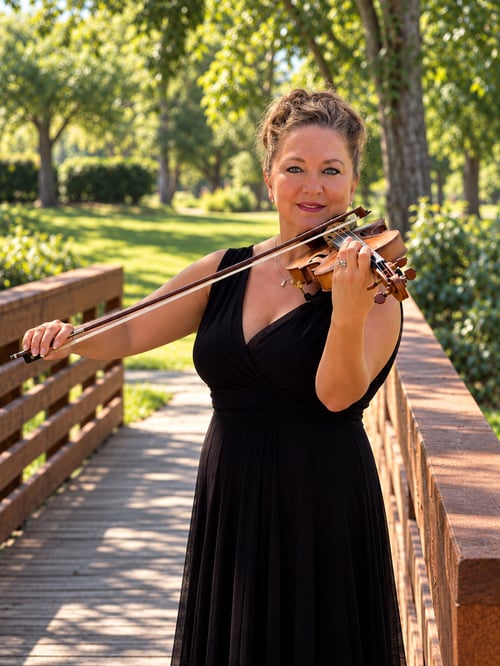
Heather Kaye Broadbent is an internationally experienced classical violinist, pedagogue, and founder of the Broadbent School of Violin Artistry.
Drawing on decades of performing and teaching experience, Heather has developed a distinctive approach to violin technique that emphasizes balance, consistency, and freedom of movement.
Through her work with violinists of all levels, she has observed that many persistent technical difficulties—including unreliable intonation, fourth-finger weakness, and unnecessary left-hand tension—often originate in the fundamental setup of the hand.
Her teaching addresses these difficulties at their source.
Central to her approach is the relationship between left-hand balance, the thumb, and the hand frame. By establishing a centered, balanced setup, violinists can develop greater consistency in finger placement without relying on excessive pressure, stretching, or compensating movements.
The principle of the silent hand is fundamental to Heather's pedagogy. A stable hand frame allows the fingers to function independently while providing the foundation necessary for more advanced techniques, including shifting and vibrato.
Rather than imposing a rigid