Bach Violin Concerto in A Minor
A Guided Repertoire Study for Tone, Positional Awareness & Musical Structure
A structurally organized study for violinists encountering Bach A Minor — whether for the first time or after years of playing it.

A structurally organized study for violinists encountering Bach A Minor — whether for the first time or after years of playing it.
The Bach Concerto in A Minor is often assigned before the violinist is structurally ready for it.
Some approach it for the first time without a clear framework for second position, hand organization, or melodic architecture within the sixteenth notes.
Others have already played it — but sense that something never quite settled.
In both cases, the issue is not talent.
It is structure.
BWV 1041 assumes positional continuity, balanced hand frame, listening within sequence, and disciplined bow distribution. When those elements are not consciously developed, violinists tend to push through the concerto rather than build from it.
This course ensures that your first study — or your return to it — is organized from the inside out.
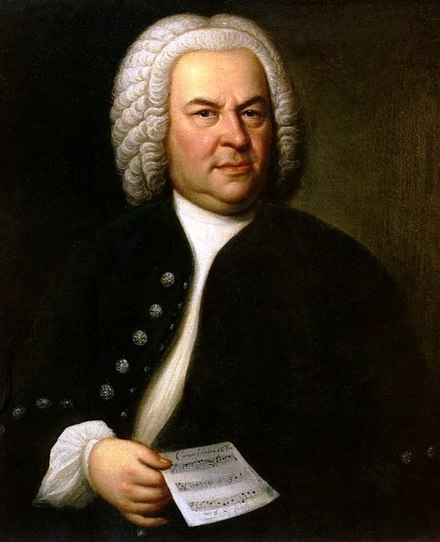
Johann Sebastian Bach (1685–1750) stands at the foundation of classical violin training.
His instrumental music is defined by proportion, balance, and internal logic. Nothing is ornamental. Every sequence and harmonic progression serves a clear purpose, requiring the violinist to listen actively rather than rely on habit.
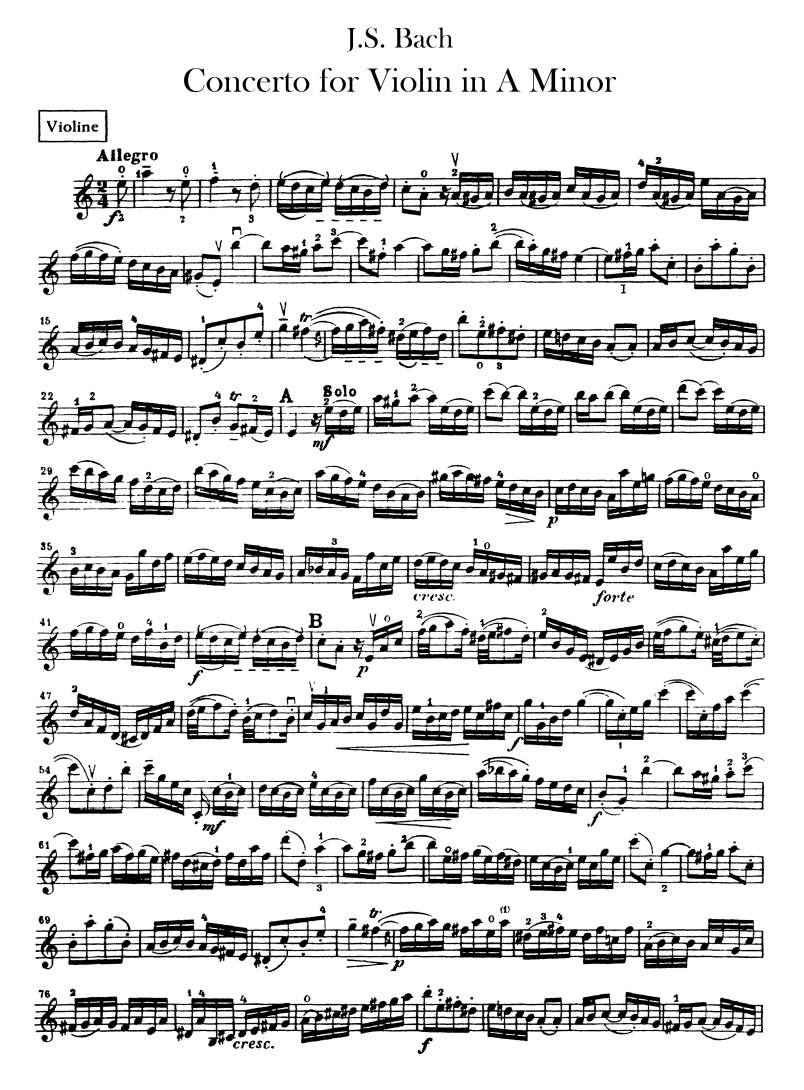
The Violin Concerto in A Minor, BWV 1041, composed during Bach’s Köthen period (1717–1723), reflects this clarity. Virtuosity is integrated into structure rather than presented as display, making the work especially revealing of a violinist’s organization, tone control, and listening discipline.
Bach’s A Minor Concerto has remained central to classical violin training because it is both immediately compelling and exacting.
The concerto assumes a level of positional continuity and listening awareness — particularly in second position — that is often not yet established when it is introduced. When studied without this foundation, challenges that belong to pedagogy are frequently experienced as personal struggle.
When approached with appropriate structure, the concerto develops:
Studied thoughtfully, Bach A Minor builds steadiness and musical accountability. Studied superficially, it exposes tension and approximation.
Pedagogically, Bach A Minor functions as foundational yet uncompromising repertoire.
Within a coherent sequence, it belongs:
For adult violinists in particular, Bach should not be approached as “easy” repertoire. It rewards calm, focused study and attentive listening — and offers little support to guessing.
Approached at the appropriate stage, Bach A Minor serves as stabilizing repertoire that consolidates intonation, coordination, and musical understanding.
This course is a guided repertoire study designed to support adult violinists in approaching Bach with clarity and structure.
Rather than emphasizing speed or surface polish, the study focuses on:
The concerto is treated as training repertoire — music that develops long-term reliability and musical intelligence rather than short-term results.
This course is suited for:
Performance preparation is not required.
The course is designed for orientation, refinement, and long-term musical security.
Through this study, you will:
This course lives in the Repertoire Room of the Broadbent School of Violin Artistry.
It is supported by:
The course stands fully on its own while naturally supporting further concerto study.
This is not a shortcut course.
The aim is to study Bach with clarity, restraint, and understanding — allowing the concerto to refine the violinist rather than overwhelm them.
Enrollment includes:
Teaching videos
Section-by-section instruction addressing tone, intonation, bow use, rhythm, coordination, and musical structure.
Public-domain sheet music
Provided with fingerings and bowings where applicable.
Piano accompaniment via Tomplay
For rehearsal, pacing, balance, and expressive study.
Performance video by Heather
Offering a musical reference for tone, timing, and stylistic clarity.
Direct lesson interaction
Students may comment directly beneath each lesson video. All comments are personally read and answered by Heather, allowing for clarification and guidance when something is unclear.
Broadbent School Course Certification
Upon completion, students receive a certificate recognizing their study within the Broadbent School of Violin Artistry.
If a question or comment reveals a need for broader technical development beyond the scope of this repertoire study, guidance is offered toward appropriate supporting courses or private study options.
Lifetime course access
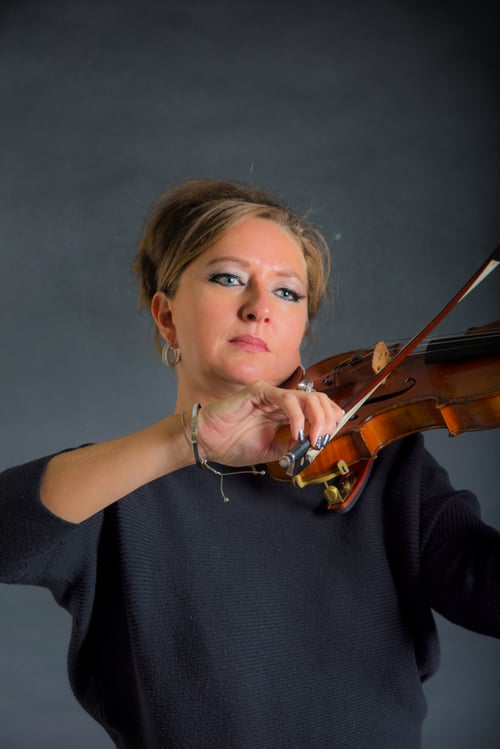
Heather Kaye Broadbent is an international violinist and pedagogue specializing in adult violin education and lineage-informed repertoire study. She is the founder of the Broadbent School of Violin Artistry, where her work centers on clarity, listening, and long-term musical development.
The Bach Violin Concerto in A Minor has been a consistent part of her performing and teaching life. She has soloed this concerto multiple times in live performance, both in the United States and in Europe, experience that has deeply informed her understanding of its structural, harmonic, and positional demands.
Through years of study, performance, and teaching, she observed that Bach is often assigned without sufficient pedagogical framework. Violinists are expected to “play it cleanly,” yet are rarely shown how intonation, bow use, positional continuity, and harmonic awareness function together within the music.
This course reflects how Heather approaches Bach in teaching:
as formative repertoire that trains the ear, steadies the hands, and refines musical thinking over time.
Her work emphasizes calm authority, structural understanding, and practice guided by listening rather than correction. The goal is not speed or surface polish, but musical security that carries into all repertoire.
This was the first time Bach actually made sense to me. The explanations helped me understand why things weren’t working instead of just fixing notes.
I’ve watched countless violin videos, but this approach is different — calm, clear, and deeply musical. It completely changed how I practice.
Your way of explaining intonation and structure feels like the missing link in my training. I finally feel oriented instead of guessing.