

Tone is Your First Impression
Tone is the defining voice of the violin. Long before speed, repertoire, or virtuosity, tone establishes credibility. It reveals the player’s relationship to the instrument. It communicates structure before expression is even considered.
Gorgeous Tone Academy exists as the central tone discipline of the Broadbent School of Violin Artistry. It is a systematic, pedagogy-first study of how violin tone is built, stabilized, refined, and sustained.
This is not imagery-based teaching. It is not “play more beautifully.” It is not aesthetic suggestion.
It is structural literacy.
Tone is treated here as the acoustic result of coordinated mechanics. When the bow is balanced, when contact point is understood, when speed and weight are calibrated, and when the right hand communicates with the stick instead of gripping it, resonance becomes dependable.
Beautiful sound ceases to be accidental.

The Philosophy of Tone in the Broadbent School
The Broadbent School is organized around permanent areas of study — Rooms that are entered, revisited, and integrated over time. Tone is not a phase. It is the audible foundation of everything that follows.
In this school, tone is not separate from technique. It is technique made audible.
Gorgeous Violin Tone approaches sound as a coordinated system. Bow geography, contact point literacy, distribution awareness, dynamic integrity, and acoustic listening are developed as interlocking skills. Rather than isolating tone as a surface concern, this discipline clarifies how sound is produced physically and how it behaves acoustically.
Stability precedes freedom.
Structure precedes expression.
From that sequence, expressive clarity emerges.

What This Discipline Develops
Gorgeous Violin Tone builds a centered, ringing core sound that can be sustained across the entire bow. It develops continuity through bow changes and reliability through string crossings. It refines dynamic shaping so crescendos and diminuendos remain resonant rather than strained.
Students learn to hear resonance rather than volume. They distinguish color from distortion. They understand how subtle adjustments in contact point influence the harmonic spectrum of the string. They experience the difference between pressing into the string and transmitting weight through it.
Tone becomes intentional.
The work does not depend on repertoire level. The same principles apply whether sustaining an open string, shaping a Bach phrase, or projecting through concerto literature. Only the complexity of application evolves.

Structure of the Tone Room
his is not a linear course to complete once. It is a reference discipline designed for return and refinement.
The material is organized into six integrated pillars:
Foundations of Sound Production
The physical and acoustic principles that govern tone creation — setup, bow relationship, listening orientation, and instrument response.
Bow Mechanics and Contact Point
The heart of tone production: straight bowing, mapping the sounding lane, calibrating bow speed, understanding weight versus pressure, and maintaining tonal integrity from frog to tip.
Left-Hand Influence on Tone
Finger balance, intonation clarity, release, and vibrato as a tonal tool that enhances resonance rather than compensates for instability.
Coordination of Both Hands
Tone under motion — string crossings, dynamic shaping, articulation, and phrasing without collapse.
Advanced Bow Technique for Sound
Tonal control in complex textures: spiccato, multiple stops, transitions, and stability in higher technical demands.
Integration into Music and Performance
Applying tone literacy to scales, études, and repertoire. Maintaining sound under pressure without relying on tension or force.
The full library includes extensive recorded instruction and archival live sessions for deeper study and long-term refinement.
Supporting Materials
In addition to the core instructional library, the Tone Room includes a curated collection of reference materials and practice companions.
These resources reinforce listening, sound awareness, and technical clarity between study sessions. They are designed to support — not replace — the primary structural work of the Tone Room.
Access to the Tone Room Resource Library is included with enrollment.

Who This Discipline is For
Gorgeous Violin Tone belongs in the daily practice of serious violinists — not as a correction, not as a temporary focus, but as an ongoing axis of integration.
This room serves violinists who want tone to remain stable as repertoire grows, players who understand that sound must be maintained rather than “achieved,” teachers seeking precise and transferable language for sound production, and professionals integrating tonal work into long-term artistic health.
Tone study here is not remedial. It is foundational and lifelong.

Its Place Within the School
The Broadbent School of Violin Artistry is organized as rooms, not levels. Each room represents a permanent area of study that supports all others.
The Tone Room stands alongside The Art of Vibrato, The Balanced Right Hand, and The Intonation Method. These disciplines reinforce one another without overlap. Tone establishes the sound core. Vibrato refines expressive contour. Intonation stabilizes pitch. Bow balance supports transmission.
Students return to the Tone Room as refinement deepens, repertoire expands, or subtle instability begins to surface.
Tone is not a chapter in study.
It is the voice of the instrument.
Begin the Tone Room
If you are ready to approach violin tone as a clear, disciplined craft —
this room is available to you.
About the Instructor
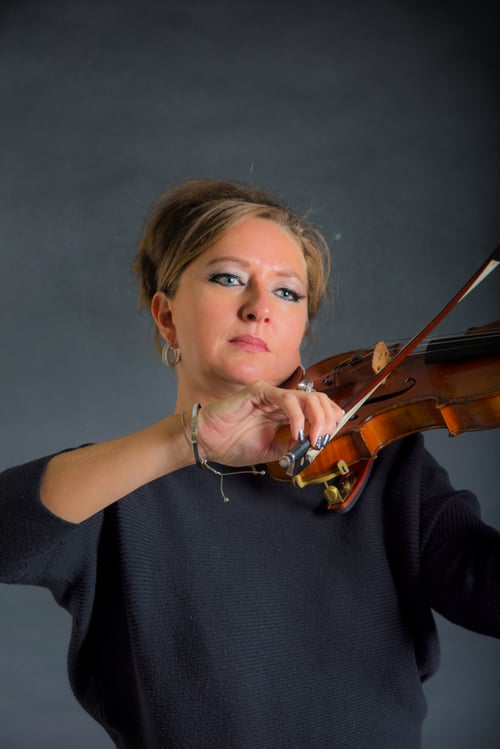
Heather Kaye Broadbent is an international violinist, pedagogue, and founder of the Broadbent School of Violin Artistry. Her work centers on humane technique, tonal integrity, and lineage-informed pedagogy grounded in the great European violin traditions.
Over the past decade, she has guided adult violinists worldwide through structured online study, workshops, and private instruction. Her teaching is known for calm authority, mechanical clarity, and deep respect for the serious adult learner.
Gorgeous Tone Academy reflects years of refinement in bow mechanics, acoustic listening, and structural sound development — offered without urgency, without spectacle, and without compromise.