

You keep seeing the same numbers.
On clocks. Receipts. Dates. Mileage. Timestamps.
Sometimes they appear during completely ordinary days. Sometimes they seem to cluster around decisions, transitions, endings, beginnings, travel, grief, or periods when something in your life is changing.
And eventually you start wondering:
Why this number? Why now?
The internet will happily give you thousands of answers.
111 means this.
444 means that.
777 means something else.
The Quiet Codes takes a different approach.
This is not about memorizing somebody else's interpretation of a number.
It is about learning to recognize archetype, pattern, timing and context—and developing the discernment to decide what, if anything, a pattern means to you.

From collecting meanings to reading a language
Numbers have existed as symbolic structures across human culture for thousands of years—in calendars, architecture, navigation, ritual, mathematics, literature and music.
The Quiet Codes approaches numerical archetypes as a kind of symbolic literacy.
You'll learn to notice:
Archetype — the underlying character or quality associated with a number
Pattern — repetition, sequence, escalation, mirroring and clustering
Timing — what is happening when the number appears
Context — how the pattern relates to your actual lived experience
Discernment — recognizing when something feels meaningful, when it may simply be coincidence, and when it doesn't matter at all
The goal isn't to convince you that every number is a message.
The goal is to give you a more intelligent way to explore the ones that catch your attention.

Instead of asking:
“What does 444 mean?”
you begin asking:
“Why this, now?”
That shift is the difference between collecting meanings and learning to read a language.

What You'll Study
Through six progressive modules, we'll explore:
- returning to presence in daily life and establishing small practices of alignment
- using repeating numbers as cues to pause and pay attention
- the archetypal tone of individual digits
- sequences, clusters, mirrors, escalation and recurrence
- interpreting patterns through timing and your own lived context
- the relationship between numerical structure, culture, art and music
This isn't fortune-telling.
You won't be given a dictionary and told what you're supposed to believe.
You'll develop vocabulary, structure and discernment for exploring patterns yourself.
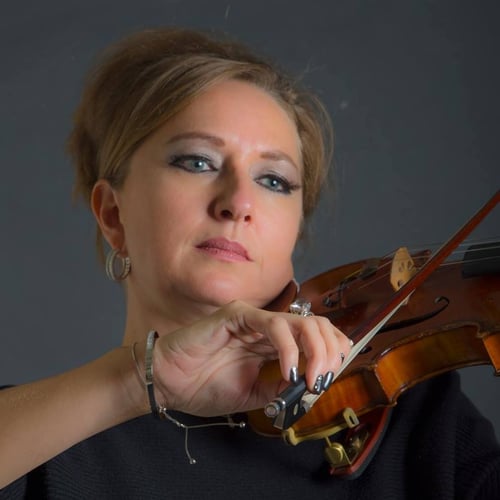
About the Instructor
Heather Kaye Broadbent is an educator, musician, writer, and lifelong student of pattern, perception, and the ways human beings create meaning.
Her work brings together analytical thinking and intuitive observation—two modes of understanding that are often treated as opposites, but don't need to be.
In The Quiet Codes, Heather approaches numerical patterns with curiosity rather than doctrine, giving students a framework for observation while leaving interpretation where it belongs: with the individual.