Monti: Czardas (Csárdás)
A guided repertoire study course

A guided repertoire study course
A focused repertoire course centered on one of the most iconic showpieces in the violin literature — a work that demands not only coordination, but emotional presence, contrast, risk, and commitment.
Csárdás is beloved by audiences and violinists alike, yet rarely studied with the seriousness it requires. This course treats Csárdás as the showpiece it is — while revealing the musical responsibility that allows it to succeed on stage.
Csárdás draws listeners in immediately.
Rooted in the Hungarian csárdás dance tradition, its structure moves from the introspective lassan to the exuberant friss, tracing an emotional arc audiences instinctively recognize: restraint and release, intimacy and abandon, control and freedom.
This is why Csárdás remains one of the most frequently performed works in the violin repertoire. It offers something rare:
For many violinists, Csárdás is their first true showpiece — the moment when playing notes is no longer enough and musical personality must step forward.
What the audience experiences as excitement, the violinist experiences as exposure.
To succeed, Csárdás demands:
Because the piece “works” quickly, it is often learned quickly — and just as often, learned incompletely. When studied seriously, it becomes formative repertoire: a study in listening, timing, courage, and expressive control.
This is showpiece repertoire that cannot be played halfway.
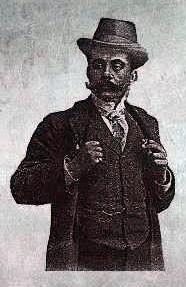
Vittorio Monti (1868–1922) was an Italian composer, conductor, and virtuoso mandolinist whose music bridged classical structure and popular appeal.
Csárdás (1904) is his most enduring work — a piece that has outlived nearly all of his other compositions and become a permanent fixture of the violin repertoire. Though compact in length, it contains a complete emotional and technical arc, making it a natural vehicle for both audience connection and artistic exposure.
Its popularity is not accidental. The piece reveals immediately whether a violinist can shape sound, pace tension, and commit fully to musical intent.
This is a complete guided repertoire study designed to reflect how Csárdás is approached in a thoughtful private studio.
The course unfolds methodically across the full work, including:
Rather than treating the piece as a technical hurdle or performance trick, the study clarifies:
The course is self-paced and emphasizes musical responsibility rather than perfection.
Enrollment includes:
🎻 Teaching videos
Section-by-section instruction addressing tone, rubato, rhythm, articulation, harmonics, and character
🎼 Public-domain sheet music
With fingerings and bowings provided
🎹 Studio-Recorded Piano Accompaniment
A professionally recorded accompaniment created specifically for this course. The pacing, rubato, and dynamic architecture reflect the interpretive framework taught in the lessons — allowing students to rehearse within the same musical structure modeled throughout the study.
🎥 Performance video by Heather
Offering a musical reference for tone, timing, and character
🗣 Direct lesson interaction
Students may comment beneath each lesson video. All comments are personally read and answered by Heather, allowing for clarification when something is unclear.
📜 Broadbent School Course Certification
Upon completion, students receive a certificate recognizing their study within the Broadbent School of Violin Artistry.
If a comment reveals a need for broader technical development beyond the scope of this repertoire study, guidance is offered toward appropriate supporting courses or private study options.
🔁 Lifetime course access
Studying Csárdás cultivates:
This piece teaches the violinist to commit fully to what they play.
Monti: Csárdás lives in the Repertoire Room of the Broadbent School of Violin Artistry.
It complements foundational repertoire (Rieding, Yanshinov) by inviting the violinist into overt expressive language — preparing the way for Romantic and virtuosic works while remaining grounded in structure and listening.
It is a showpiece — and therefore a study in expressive responsibility.
Csárdás is a beloved crowd pleaser, but when studied carefully, it becomes something deeper: a lesson in courage, listening, and emotional clarity.
This course was created to give violinists permission to take the piece seriously — to slow it down, open it up, and learn how expression actually works from the inside.
This is music that asks you to show up.
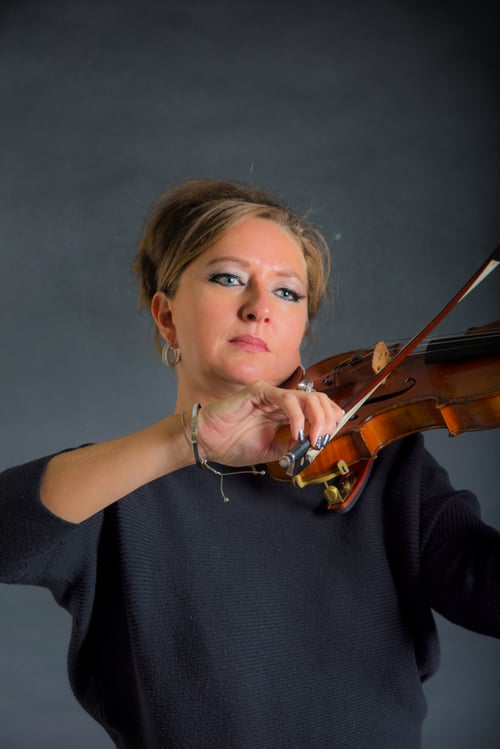
Heather Kaye Broadbent is an international violinist and pedagogue specializing in adult violin education and lineage-informed repertoire study. She is the founder of the Broadbent School of Violin Artistry, where her work centers on thoughtful technique, listening, and expressive responsibility.
Her teaching integrates technical organization with musical intention, helping violinists understand not only what to play, but how and why musical decisions are made. In repertoire such as Csárdás, her focus is on cultivating expressive authority — not display for its own sake.
Her mission is to offer violinists the instruction they were expected to know, but were rarely shown how to learn.